
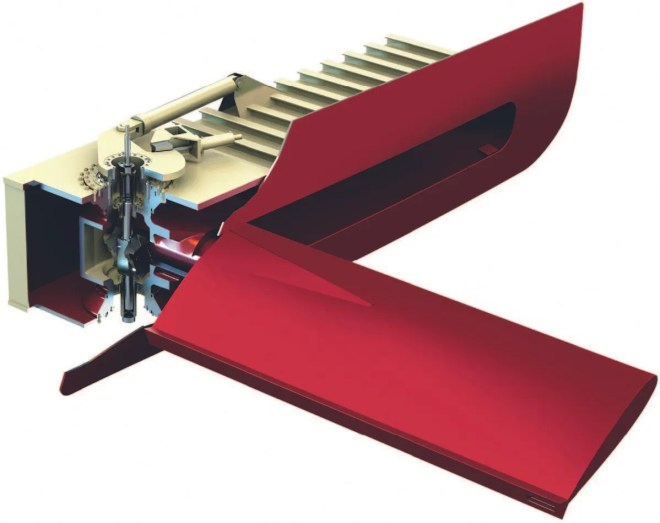
The 3-Year Major Service: Protecting Your Naiad and Wesmar Stabilizers
Active fin stabilizers from Naiad and Wesmar require a critical 3-year major service including shaft seal replacement, hydraulic cylinder rebuilds, and full oil changes. Skip it and a $300 seal job becomes a $10,000 shaft replacement. Here's what the service involves, brand-specific challenges, and the real cost math.
For offshore cruisers, active fin stabilizers from industry leaders like Wesmar and Naiad provide unmatched comfort and safety by counteracting the rotational forces of the sea. However, these complex hydrodynamic systems require strict adherence to a proactive life-cycle maintenance schedule.
The most critical milestone for both Wesmar and Naiad systems is the three-year or 4,000-hour major service. This comprehensive mechanical overhaul involves removing the external fins, which means a vessel haul-out is mandatory. If you're approaching the three-year mark, here's everything you need to know — with real cost numbers — about what this service entails and why skipping it can cost you 30x more than doing it on time.
1. Lower Main Shaft Seal Replacement
The most crucial wear items in the stabilizer assembly are the lower main shaft seals, which take the brunt of the harsh marine environment at the hull penetration point. Naiad uses specialized bi-directional seals rated for up to 500 psi. It is imperative to use genuine manufacturer seals during replacement — aftermarket alternatives often lack the necessary pressure ratings and exact bi-directional profile, leading to immediate leaks upon immersion.
Here's where neglect gets expensive: when seawater bypasses a worn seal, it reaches the stainless-steel shaft and causes pitting. A pitted shaft acts as a harsh abrasive that will instantly destroy any new seals you attempt to install, creating a permanent leak that requires a complete shaft replacement.
Pro Tip: Preventive seal replacement costs $200-$300 in parts. A pitted shaft replacement runs $5,000-$8,000 per side in parts alone, plus labor and haul-out. We've seen this cascade happen within a single season on boats in the Gulf — the salt water and heat in Southwest Florida accelerate corrosion significantly compared to northern waters.
2. Hydraulic Cylinder Rebuilds
Inside the vessel, the hydraulic cylinders that drive the fins endure constant high-pressure cycling. Over three years of use, internal seals begin to allow fluid to "bypass" from one side of the piston to the other. This causes a noticeable loss of system responsiveness, often felt as "slop" in the fin's movement — the fins react a half-second late, or don't hold position in heavy seas.
During the major service, technicians disassemble these cylinders and replace all internal O-rings and soft parts to restore immediate, crisp fin control. Budget $400-$600 per cylinder for the rebuild.
3. Complete Hydraulic Oil Replacement
The three-year service also requires a full replacement of the system's hydraulic oil, typically SAE 10W-40 multigrade fluid. Over time, the oil breaks down from heat cycling and absorbs moisture from condensation. Fresh fluid ensures that the high-quality anti-wear additives are replenished, which is essential for protecting the system's sensitive proportional valves from scoring.
Contaminated hydraulic fluid is the silent killer of proportional valves — a $2,000-$3,500 component that fails quietly until the fins stop responding altogether.
Brand-Specific Technical Challenges
Removing the fins and servicing the internal assemblies requires specialized knowledge of your specific stabilizer brand. This is not a job for a general marine mechanic.
Naiad Dynamics
Pulling the fins on a Naiad system is a highly technical process because Naiad fins utilize a pressed-on, tapered, and splined fit with no traditional fastenings. Technicians must use specialized hydraulic tools to safely pop large fins apart, or mechanical pullers for smaller fins.
When reinstalling the fins, it is absolutely critical that the locking taper surfaces are completely clean and dry, and the fin bolts must be torqued precisely to the manufacturer's specifications. Improper torque or contaminated taper surfaces will result in a loose fin — a dangerous condition offshore.
Wesmar
Disassembling a Wesmar actuator demands strict procedural rigor, particularly regarding its digital electronics. The system uses a 5k potentiometer mounted on top of the fin shaft to send precise position feedback to the control console.
Before detaching it, technicians must use a marker to meticulously index the orientation of the potentiometer bracket and flexible coupling. If it is reinstalled 180 degrees out of phase, the controller will receive inverted signals, causing the fins to slam violently into the hull stops. The upper housing must also be extracted to inspect the roller bearings, which should be repacked with water-resistant grease like Lubriplate Marine A.
The Cost Math: Preventive vs. Reactive
The financial case for staying on schedule is overwhelming:
| Service Item | Preventive Cost | Failure Cost |
|---|---|---|
| Shaft seal replacement (per side) | $200 – $300 | $5,000 – $8,000 (shaft replacement) |
| Hydraulic cylinder rebuild (per unit) | $400 – $600 | $2,500 – $4,000 (full cylinder replacement) |
| Hydraulic oil change | $300 – $500 | $2,000 – $3,500 (proportional valve failure) |
| Total 3-year service | $1,500 – $3,000 | $10,000 – $25,000+ |
This is what the industry calls the "Hatteras Factor" — where a neglected seal failure cascades into a $10,000+ repair bill for a pitted shaft and ruined bearings within a single season. We see it every year on boats that come to Southwest Florida from up north without current service records.
Pro Tip: Many strategic boat owners align this critical three-year stabilizer service with their routine bottom painting schedule. The haul-out is already happening — adding the stabilizer service while the boat is out of the water saves you a second haul-out fee ($1,500-$4,000 depending on vessel size). Our Preventive Maintenance Programs help you plan these service windows in advance.
When to Schedule Your Service
In Southwest Florida, the ideal window for stabilizer service is October through December — after hurricane season, before the winter cruising season, and when boatyards have availability. If you're planning a Bahamas crossing, Great Loop departure, or extended Gulf cruise, get the service done at least 30 days before departure to allow time for sea trials and any follow-up adjustments.
We service Naiad and Wesmar stabilizer systems on vessels from Fort Myers, Cape Coral, Naples, Marco Island, Sarasota, and throughout Southwest Florida. Call us at 239-323-9600 or request service online to schedule your three-year major service.
Frequently Asked Questions
Q: How do I know if my stabilizers are due for the 3-year service?
A: Check your service records for the last major overhaul date. If you purchased the vessel used and don't have records, assume the service is due. Signs of overdue service include: increased fin "slop" or delayed response, hydraulic fluid that's dark or smells burnt, any visible weeping around the shaft seals, or the system running louder than normal.
Q: Can I do the shaft seal replacement without a haul-out?
A: No. The fins must be removed to access the lower shaft seals, and the hull penetration must be above the waterline during service. A haul-out is mandatory for this work. That's why we recommend combining it with bottom paint and other below-waterline work.
Q: What happens if I use aftermarket seals instead of genuine Naiad or Wesmar parts?
A: Aftermarket seals frequently lack the correct pressure rating (500 psi for Naiad) and the exact bi-directional profile. We've seen aftermarket seals leak within days of installation, requiring a second haul-out. The $50-$100 savings on parts is not worth the $3,000+ cost of a repeat haul-out and service.
Q: How long does the 3-year major service take?
A: Typically 2-3 days for a standard service on a single pair of stabilizers. If shaft pitting or other damage is discovered, add 1-2 weeks for parts sourcing and additional machining. This is another reason to schedule proactively — reactive repairs always take longer because parts aren't in stock.
Q: Do you service both Naiad and Wesmar systems?
A: Yes. We have 25+ years of experience with both Naiad Dynamics and Wesmar stabilizer systems, including the specialized tools required for Naiad's tapered spline fins and Wesmar's potentiometer indexing. We service vessels at marinas and boatyards across Southwest Florida — Fort Myers, Cape Coral, Naples, Marco Island, and Sarasota.