Like cars, boat batteries naturally grow weaker over time. Since they serve the vital functions of starting your engine and powering all of your vessel's electronic components, a weak battery can quickly ruin a perfect day on the water. Here in Southwest Florida — from Fort Myers to Naples to Marco Island — the year-round heat accelerates battery degradation faster than in cooler climates. Recognizing the early warning signs of a failing marine battery can save you from being stranded offshore and help prevent costly damage to other engine components.
After 25+ years of marine battery service across Southwest Florida, here are the key signs we see most often at Accumar Marine.
1. Engine Troubles and Slow Cranking
One of the most common and immediate indicators of a dying marine battery is a slow or sluggish engine crank. If the engine struggles to turn over, takes longer than a couple of seconds to start, or if you hear rapid clicking noises upon ignition, your battery is likely lacking the power it needs. Furthermore, if your boat feels unusually slow or unresponsive while trying to accelerate, a degraded battery could be the culprit.
Pro Tip: A fully charged 12V marine battery should read around 12.6 volts at rest. If your multimeter reads below 12.2V after sitting overnight, the battery is significantly discharged and may not recover fully.
2. Electrical System and Accessory Glitches
Your onboard accessories rely heavily on consistent battery power. If you begin to notice dimming lights or your electronics (like the radio and navigation system) operating slower than usual, it is an early sign of battery trouble. Another classic symptom of a weak starting battery is when electronics, such as your GPS chartplotter, blink out and reset every time you start the engine. This happens because the battery's voltage is dropping below the minimum requirements needed to keep those devices running during engine turnover.
A weak battery can even disrupt your boat's computer systems, causing gas or oxygen sensors to malfunction. If you're seeing intermittent electrical issues, have your battery load-tested before replacing expensive electronics — we see this misdiagnosis regularly at our marine electronics service calls.
3. Difficulty Holding a Charge and Reduced Run Times
A healthy marine battery should be able to hold a steady charge. If you notice that your battery depletes rapidly or loses voltage quickly after a full recharge, it's a major red flag. You will likely experience shorter run times on the water, meaning your trolling motor, fridge, or lights will cut out much sooner than they used to.
Pro Tip: If your house bank is draining faster than expected, check for parasitic draws first. A single stuck relay or a bilge pump with a corroded float switch can silently drain 2-5 amps around the clock — that's 50-120 amp-hours per day gone before you even step aboard.
4. Physical Abnormalities: Swelling, Leaking, and Heat
Conducting a quick visual inspection can reveal a lot about your battery's health. You should immediately look into replacing your battery if you spot any of the following physical signs:
- Swelling or Bulging: A deformed or bulging battery case is a clear signal of serious internal failure or overcharging. Stop using the battery immediately — this is a safety hazard, especially in the enclosed engine compartments common on boats in our Fort Myers and Cape Coral service area.
- Excessive Heat: If the battery feels unusually hot to the touch during use or charging, or if you hear hissing sounds, it is a serious warning sign of thermal runaway.
- Cracks and Leaks: Physical trauma, extreme vibrations, or acid buildup can cause the battery casing to crack or leak dangerous fluids. The rough chop in the Gulf and the vibration from twin outboards accelerate this.
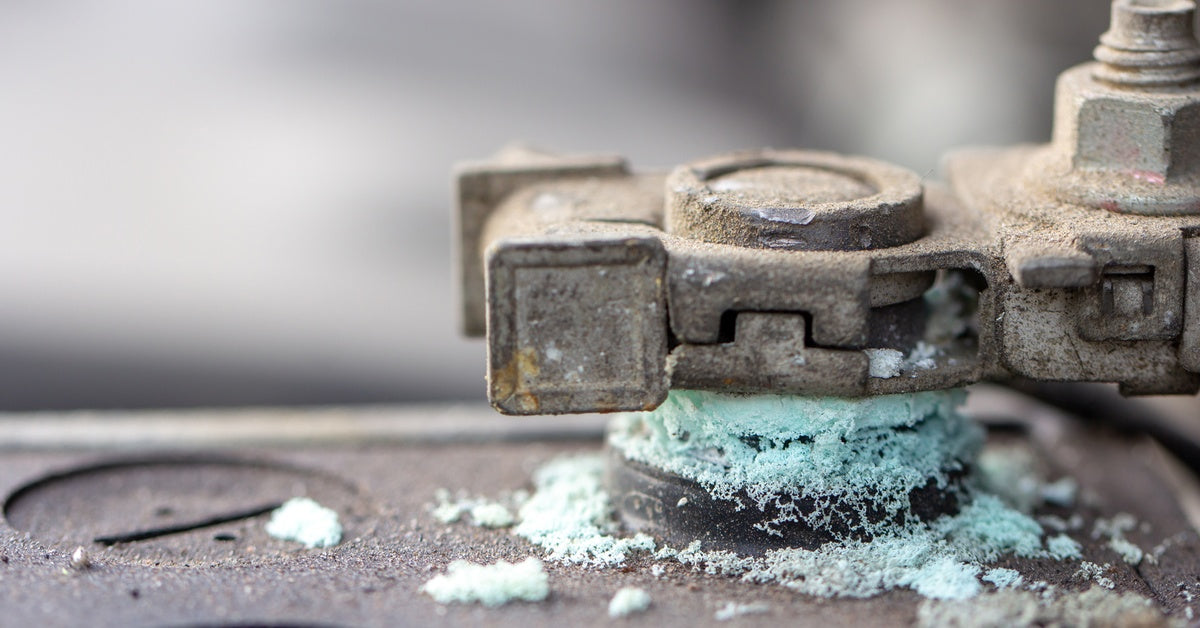
- Corrosion: Look for a greenish or white crusty buildup of sulfate crystals on the battery terminals, which drains battery life and disrupts the flow of power.
Pro Tip: Florida's heat is the #1 battery killer. Batteries in Southwest Florida typically last 2-3 years in a wet-slip environment versus 4-5 years up north. If your batteries are approaching the 3-year mark, get them load-tested before your next offshore trip.
5. Increased Gas Consumption and Alternator Strain
While there might not seem to be a direct link between your battery and fuel efficiency, running a boat with a weak battery can increase your gas consumption. Once the engine is running, the alternator takes over to supply power to electronics and recharge the battery. If your battery is weak, the alternator gets overworked trying to keep up with power demands. This forces the engine to burn more gas to drive the accessory belts, ultimately decreasing your boat's efficiency and shortening the lifespan of your alternator.
We've seen alternator replacements run $800-$1,500+ on marine engines — all because a $200-$400 battery wasn't replaced in time.
What to Do Next
If you encounter any of these warning signs, take action before your battery completely fails:
- Check voltage with a multimeter — a fully charged 12V marine battery should read around 12.6 volts at rest.
- Clean terminal corrosion with a wire brush and apply dielectric grease to prevent future buildup.
- Check for parasitic drains — disconnect the negative terminal and measure current draw with an ammeter. Anything over 50mA with everything off indicates a hidden drain.
- Get a professional load test — voltage alone doesn't tell the full story. A load test reveals whether the battery can deliver its rated cranking amps under stress.
If it's time for new batteries, we install and service all major marine battery brands including Relion, Watt Cycle, Epoch, and LiTime (lithium LiFePO4) and Interstate, Lifeline, Optima, and Odyssey (AGM/lead-acid). Use our Battery Selector Tool to find the right fit for your vessel, or check our marine battery service page for full details.
The Bottom Line
Consistent regular maintenance is the best way to ensure your boat is always ready for its next adventure. Our Preventive Maintenance Programs include battery load testing, terminal cleaning, charging system checks, and parasitic draw inspections — starting at $250 per visit for vessels under 35 feet. Don't wait until you're stranded at the fuel dock in Fort Myers Beach.
Frequently Asked Questions
Q: How long do marine batteries last in Southwest Florida?
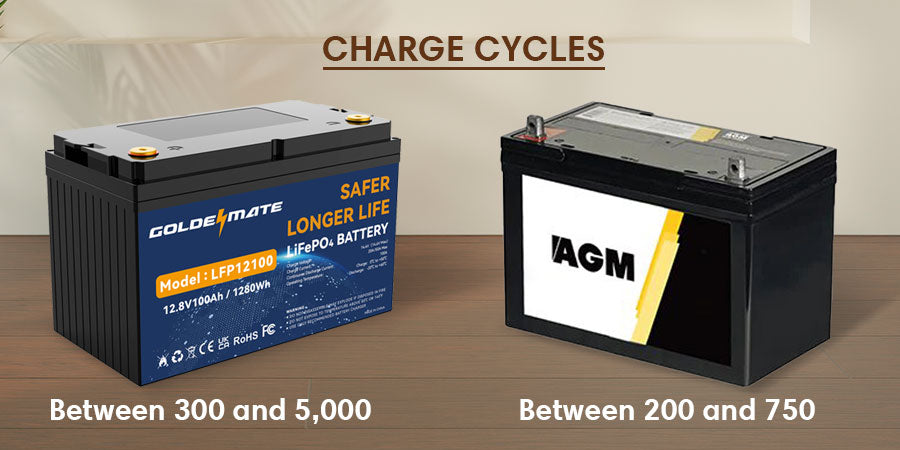
A: Typically 2-3 years for lead-acid/AGM in a wet-slip, 3-4 years on a lift or trailer. Lithium LiFePO4 batteries (Relion, Epoch, LiTime) last 8-10 years. Florida's heat is the primary factor — batteries degrade 2x faster in sustained 90°F+ environments compared to northern climates.
Q: Should I switch from AGM to lithium batteries?
A: For house banks, lithium is almost always worth it — they're 60% lighter, deliver consistent voltage until nearly empty, and last 3-4x longer. For starting batteries, quality AGM (Optima, Odyssey) is still the standard. We can help you evaluate the cost-benefit for your specific setup at Accumar Marine Battery Service.
Q: What's the difference between a starting battery and a deep-cycle battery?
A: Starting batteries deliver a short, high-amperage burst to crank the engine. Deep-cycle batteries provide steady, lower power over long periods for house loads (lights, fridge, electronics). Using a starting battery for house loads — or vice versa — will kill it prematurely. Dual-purpose batteries exist but compromise on both functions.
Q: How do I check for a parasitic drain on my boat?
A: Disconnect the negative battery cable and connect an ammeter in series between the cable and terminal. With all switches off, a healthy boat should draw under 50mA. If it's higher, pull fuses one at a time to isolate the circuit. Common culprits: stuck bilge pump relays, CO detectors, stereo memory circuits, and corroded wiring.
Q: How much does marine battery replacement cost?
A: AGM batteries run $200-$450 each depending on group size and brand. Lithium LiFePO4 house banks run $800-$2,000+ per battery but last 3-4x longer. Installation is $175/hr. Our maintenance programs include battery testing so you catch problems before they leave you stranded.